
Artistic Swimming – Spring Harmony

“We are water” is the motto of the Harmony Zone, created as part of the Spring Harmony artistic swimming competition, which our magazine supported as a media partner. We talk to the organisers—Monika Szczęśniak, Jadwiga Czyż and Piotr Czyż—from the HARMONIA Foundation – Straight Through Life about this sport and why it can make such a difference in young people’s lives.
Girls still dominate in the pool, but artistic swimming is increasingly opening its doors to boys, too. It’s a sport for anyone with the courage to combine a gymnast’s strength with grace in the water.
Artistic swimming: a sport without barriers or age limits
Artistic swimming is a sport for everyone—girls and boys alike—and a sport for life, from childhood through to the Masters category. At the Masters World Championships, some athletes are over 80 years old! [laughs] It’s a sport for people with and without disabilities. It’s also growing wonderfully among athletes with Trisomy 21. We have athletes with Trisomy 21 in Poland, and they’ve won many titles at international competitions.
Why take up artistic swimming? A blend of sport, art and teamwork
It’s a sport for people who want to stay fit and feel part of a team. Why does it help you stay fit? Because artistic swimming brings together many disciplines: swimming, gymnastics, acrobatics, and elements of dance and ballet. It also includes theatrical elements. Every routine performed in the water is a performance. It should be artistic—that’s where the sport gets its name. Athletes need to express the emotions inspired by the music and the performance’s theme. It’s also a team sport, so everyone benefits from being part of a team: mutual support, learning to take responsibility for the group, sharing in successes and getting through more difficult moments and setbacks together.


When should you start artistic swimming?
At what age can someone start this sport, and what does an athlete’s journey look like?
You can start artistic swimming in childhood. The basic requirement is being able to swim, so it’s a good idea to learn at least well enough to feel comfortable and confident in the water. Children usually start training at around 8–10 years old, although there’s no reason they can’t start at a different age. The sport is very inclusive, and there really is a place for everyone. Starting later is no problem either. Many girls and boys who have previously taken gymnastics or acrobatics, for example, catch up very quickly. They already have good body awareness, muscle control and flexibility, which helps them learn new skills much faster.
Artistic Swimming SPRING HARMONY: more than a sports competition
Are events like Spring Harmony an opportunity to promote the sport, or are they mainly a way to assess young people’s skills and talent?
The idea for the Artistic Swimming SPRING HARMONY International Meet came about quite spontaneously, though it was built on years of work and experience from my involvement in artistic swimming at different levels—from beginner sessions for people who want to enjoy artistic swimming and try something special, through youth sport, all the way to international championship competitions. We drew on all of those experiences when putting the event together.
One part of the event was called 4FUN and was designed for people who see artistic swimming as a healthy, enjoyable way to spend time with friends. It was for those who want to do something special and stand out. This section featured routines performed under specially adapted rules: the routines were a little simpler and more accessible, and they were shorter. The main focus was on their artistic side—showing emotion and capturing the audience’s attention.
The event also included a traditional competitive section, 2COMPETE, run according to the rules and regulations of the international federation World Aquatics. These are the same rules that govern the Olympic Games and World Championships, so the competition was serious and athletes had to meet demanding standards. Coaches built their routines around mathematical calculations. They aimed for a high degree of difficulty while still leaving room for artistic expression. It was a completely different level. For some participants, the competition also served as a qualifier for European championships. We were able to do this because we assembled a highly qualified judging panel. We were supported by top-level experts who have taken part in and judged events such as the Olympic Games and World Championships. They have also served on the World Aquatics or European Aquatics Technical Committees. Eight such experts joined the judging panel, including chief referee Marie-Yildiz Serimer (Kavaklioglu) from France, World Aquatics Evaluator Marlon Falcon from Venezuela, and Iva Gricar from Croatia, who oversaw the work of the technical controllers.
The competition was also preceded by a series of training sessions led by artistic swimming experts. Quality mattered to us: we wanted the athletes to receive an objective and fair assessment, and the judges to have room to develop and update their knowledge of a sport that has been changing continuously for more than three years. We also wanted to give coaches a high-quality event where they could exchange experiences, receive feedback and get guidance from judges and controllers to support their future work.
Mission Łódź: promoting the sport and the success of the online broadcast
The event was also designed to promote the sport, and Łódź was chosen with that in mind. As recently as 2022, artistic swimming wasn’t represented in the Łódź region. Thanks to the SYNCHRO START programme, the sport is now practised in four cities: Łódź, Aleksandrów Łódzki, Skierniewice and Tomaszów Mazowiecki. Athletes from these clubs took part in the AS SPRING HARMONY competition. Hosting the event could therefore lead to a measurable rise in interest in local classes, especially in this region. The competition was also streamed online and watched by more than 8,000 people.
Most viewers were probably parents and supporters who couldn’t make it to Łódź, but perhaps some people who happened to come across the broadcast felt inspired to give the sport a try. [laughs] I’m a good example of that myself. I remember my first encounter with artistic swimming very clearly. It was at the Palace of Youth in Warsaw, during a pool show at some kind of celebration. I remember the performance exactly. Looking back, I wouldn’t say its standard was especially high, but at the time it made an enormous impression on me… And that was that… I’ve been involved in the sport for more than 35 years.
Artistic swimming is growing in Poland. Many people with fresh ideas and open minds have joined the sport, and they understand what people need today. That bodes well for the coming years and for making the sport more popular and accessible to children and young people. It’s not only beautiful and impressive, but also highly enriching because it develops a wide range of skills—and, above all, it offers significant health benefits.


Artistic swimming as a remedy for the “epidemic” of poor posture
Posture problems are becoming increasingly common among children. Can artistic swimming really be a “remedy”? Can children with these problems be treated through the sport, or is artistic swimming more of a preventive measure?
In the age of smartphones and heavy backpacks, the “epidemic” of poor posture among children is real. It’s understandable that parents look for alternatives to boring corrective exercises. Artistic swimming—formerly known as synchronised swimming—is a fascinating blend of sport and art that can offer unique benefits for the spine. It’s important, though, to distinguish between when it can support treatment and when it serves as prevention.
Why can artistic swimming help?
Unlike conventional swimming, which is dominated by repetitive movements, artistic swimming requires children to use their bodies in specific ways:
- Building a strong muscular corset: To stay upright in the water—often upside down!—children have to engage their deep abdominal and back muscles continuously. These core muscles are essential for maintaining good posture.
- Lengthening the body: The sport places great emphasis on aesthetics: athletes are expected to look “stretched out”. This helps children become more aware of their bodies and develop the habit of standing tall, which they can carry over onto land.
- Taking the load off the spine: The water counteracts the effects of gravity. The vertebrae aren’t compressed, allowing children to work safely on their range of motion.
- Symmetry: Most movements in artistic swimming are performed on both sides of the body, helping prevent asymmetries from getting worse, for example in cases of mild scoliosis.
A “remedy” or prevention?
It’s important to be precise here: artistic swimming is an excellent form of prevention and can support treatment, but it can’t replace medical physiotherapy for serious postural conditions.
When is it a preventive measure?
For children with so-called functional postural problems—caused by weak muscles rather than changes to the skeletal structure—such as:
- a mild rounded back, or slouching,
- protruding shoulder blades,
- low muscle tone.
In these cases, regular training can act like a “remedy” by strengthening the muscles enough for the problem to resolve.
When can it support treatment?
If a child has been diagnosed with structural scoliosis or another advanced condition, artistic swimming won’t “cure” the spinal curvature on its own. However, it can be an ideal complement to a treatment plan prescribed by a doctor.
- Important: With significant asymmetries, some acrobatic figures may not be recommended. It’s a good idea to consult a physiotherapist before enrolling a child in competitive classes.
In short, is it worth trying? Definitely. Artistic swimming teaches children something they don’t learn at school: self-correction. Children don’t straighten up because “Mum told them to”, but because they need to do so to stay afloat and look good in a routine.


Harmonia Camp: learning and fun in synergy
You organise Harmonia Camp. What is it, and who is it for: beginners, athletes with some experience, or perhaps coaches?
Harmonia Camp is another project we’re running. The first edition took place in 2025. It was a shorter event, held over an extended weekend during the school year, and it turned out to be a great success. Fifty children from different clubs across Poland took part, along with their coaches. We offered artistic swimming and specialist sports sessions, as well as a full programme focused on emotions. That part took place on the stage of the beautiful Gryphius Theatre in Głogów, making the event even more special.
This time, we’re making use of the summer holidays and will be in Łódź from 17 to 27 August. Harmonia Camp offers time and space for both children and coaches to develop. Under the guidance of our special guest, a Puerto Rican Olympian, and Leilani Torres, an international artistic swimming consultant and World Aquatics educator, we’ll work on our artistic swimming skills while also taking care of other areas of development.
There will also be dance classes with acting elements, which may help participants express emotions more effectively. We’ll focus on the children’s mental wellbeing and their overall development. Łódź’s Sports Bay has excellent facilities for this. The camp is definitely for everyone—beginners and advanced athletes, coaches, and female and male athletes alike.
Why? Because bringing together different groups—each contributing something and taking something different away—creates a synergistic effect. That’s what we want to encourage, because learning from one another makes us richer. It helps us grow, improve and overcome limitations. Some people will attend the camp to improve their technical skills. Others will focus on personal development and becoming part of a thriving community. Different goals. Different stories. One adventure and one passion: water and artistic swimming. (www.harmoniacamp.pl)


The future of artistic swimming in Poland: a path to the Olympic Games?
What does the future hold for artistic swimming in Poland? What needs to happen for the sport to develop to an Olympic level?
The sport needs to become more accessible and widely practised. We’re at a stage similar to where rhythmic gymnastics was a dozen or so years ago. It paved the way and showed that recreational gymnastics for everyone is the right place to start. Among the many children who take part, some will naturally want more. They’ll be ready to decide whether to give up time with their peers or other interests in order to develop in the sport. If we’re thinking about a path to the Olympic Games, it certainly won’t be an easy one. It takes sacrifice, enormous effort and pushing past barriers. There will be plenty of tears, setbacks and times when athletes have to pick themselves up again. Very few people can take all of that on—and even fewer will go on to win the medals they dream of at major championships…
For those pathways to open up, artistic swimming needs to become popular, recognisable and widely available, with exciting events such as competitions and other national or regional gatherings. This is work for the much larger group of people who can benefit from the sport. They take part for their health and wellbeing, for personal growth and for social connections. Everyone can come away a winner if they keep developing!
Interview by: Maciej Mazerant / Managing Editor, AQUA SPEED Magazine
Photos: Michał Kolanowski | HARMONIA Foundation – Straight Through Life
Recommended
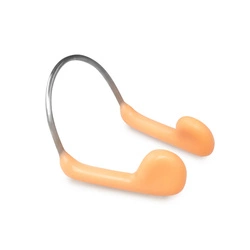
Swimming nose clip

Swimming nose clip "NEW"

Swimming nose clip Clips 01

Women's pool shoes Panama 03 - pink-grey

Kid's microfiber poncho Aqua Speed 80 x 140 cm 09 - pink

Maxpack multifunctional swim backpack 07 42L - black
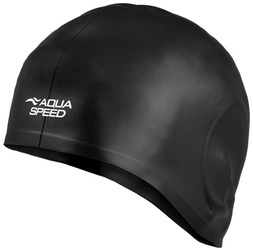
Big silicone swim cap and long hair Aqua Speed Ear Cap Volume 07 - black

Women's sport swimwear Aqua Speed Ana 01 - black

Microfiber poncho for adults Aqua Speed 02 - turqouise
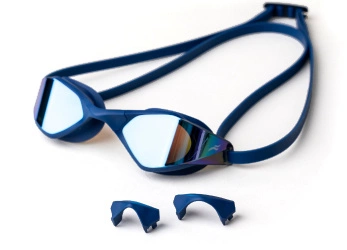
Goggles swimming Aqua Speed Riptide Mirror 10 - blue

Aqua Speed 24 pool sports bag - S - turquoise
