
Swimming Lessons for Adults: An Interview with Maja Felkel

Understanding people and water is the most important part of being a swimming coach or instructor. We met with Maja Felkel (Pływacki Styl Swimming School Pływacki Styl), who worked through her own difficult relationship with water so she could now adapt with a smile and enthusiasm to each person she supports as they learn to swim. A competitive swimmer, she has created a space where people learn to feel the water. The most important thing isn’t whether someone swims faster, but whether they swim with more ease…
What is it like to end a sports career?
When you started swimming, did you ever think about what you would do when you finished? When did those thoughts first come up?
At first, I didn’t think about it at all. Swimming was my whole world. Everything revolved around training, competitions and the next goal. It was an intense time, when you live in a somewhat closed-off reality. Every day is organised around training, recovery and competitions. You don’t think about what comes next because you’re completely immersed in it.
I think that’s natural in competitive sport. If you want to perform at a high level, you have to be fully committed. There’s no room for a “Plan B” because all your energy goes into what you’re doing here and now.
Mental fatigue in sport and a loss of motivation
Over time, though, something began to change. I became tired—not just physically, but also, and even more so, mentally. That was when I started to resent swimming a little. It wasn’t one particular event, but a process that built up over a longer period. I reached a point where I’d simply had enough. At that time, I couldn’t imagine myself in the water in any kind of competitive role. I wanted nothing to do with it. For me, that chapter was closed, and I thought it would stay that way.
Swimming without pressure: how to rediscover your love of the water
Only after some time did things begin to change. I returned to the water, but without pressure, results or expectations. I approached it in a completely different way—more calmly and mindfully. That was a very important moment for me, because for the first time I began to experience water differently: not as a place to achieve goals, but as a space where I could feel something, understand something and slow down a little.
I started noticing things I hadn’t had room for before: my breathing, tension in my body and the way I moved through the water. They all took on a completely different meaning. Only then did I begin to think that maybe I did want to stay connected to swimming, just not in the way I’d known before. I wanted to do it on my own terms, without pressure, comparisons or the constant pursuit of results.


What qualities should a good swimming instructor have?
A swimming school is a natural career path. How did you prepare for this role? What qualities do you need to teach people to swim?
I think the most important qualities for a good swimming instructor are strong emotional intelligence and simply enjoying working with people. Without those, the job quickly loses its meaning. Swimming isn’t just about learning movements. It’s about working with emotions, which can often be very strong. People come to the water feeling afraid, tense or out of control. If you don’t notice that or know how to work with it, no amount of technique will matter.
Learning to swim and the mind: why the atmosphere at the pool matters
I quickly realised that what really determines someone’s progress isn’t how much they know about swimming, but how they feel during the lesson. I honestly believe that as much as 70% of success in this work comes down to the atmosphere, the relationship and a sense of safety—not technical knowledge. People don’t come just to learn how to swim. They come for a sense of calm, understanding and reassurance that someone is guiding them.
As for my own preparation, it didn’t follow a set formula. I focused more on observing carefully and drawing conclusions. I saw how often swimming knowledge is taught in a way that doesn’t connect with people at all: it’s too technical, too rigid and unrelated to what someone actually feels in the water. That was a turning point for me.
Instead of adding more instructions, I went back to the basics: breathing, body awareness and our relationship with the water. If someone isn’t breathing properly, can’t feel their body and is tense, no technique will be stable. They might manage to reproduce it for a moment, but it won’t last. I know now that a good instructor isn’t the one who knows the most, but the one who can adapt to another person and guide them through the process at their own pace—with care, patience and respect.
Swimming lessons for adults: how to stop fighting the water
You teach beginners, but you also introduce elements of competitive swimming. What makes you feel that you’re doing a good job?
For me, it’s never about whether someone can swim a length faster or whether their technique looks more “perfect”. I see the results of my work in completely different moments. At first, there’s often a lot of chaos: tension, struggling to breathe and trying to control every movement. That’s when you can see that the body and mind aren’t working with the water at all.
How can you manage your breathing and muscle tension while swimming?
When a sense of calm begins to emerge during our work, I know we’re heading in the right direction. The person stops rushing. Their breathing starts to settle. Their movements are no longer forced; they begin to flow from what’s happening in their body.
These are often very subtle changes, but they matter most. Anyone can learn a sequence of movements. But real progress begins when someone starts to understand what they’re doing and feel it. Often, the greatest achievement isn’t swimming faster, but swimming with more ease. If someone gets out of the water and says it’s the first time they weren’t fighting it—they were just swimming—I know we’ve done good work together.


Private swimming lessons or a group course: which should you choose?
You chose to offer private lessons. Why?
Because that’s the only format in which I can give someone my full attention. From the outside, swimming looks fairly simple, but it’s a very individual process. Everyone has different areas of tension, different experiences with water and a different learning pace. If I want to do this well, I can’t put everyone through the same routine.
Private lessons give me the space to see the person, not just their movements. Sometimes the problem isn’t technique, but breathing. Sometimes breathing is affected by fear. And sometimes someone “knows how to swim” but has never learned to feel the water. You can’t pick up on that in a group, where your attention is divided.
I don’t want to teach movements for people to simply tick off a list. I want to guide them through a process. That takes time, focus and a one-to-one relationship.


A modern swimming school: passion and business
Where do you see yourself in this profession in five or ten years? Is it more of a business or a passion?
At the moment, it’s definitely more of a passion, but one I take very seriously. I really enjoy what I do. I enjoy working with people, the process and those moments when something “clicks”. At the same time, I know that if I want to do this well for a long time, it also needs to be a well-organised business. In a few years, I still see myself at the pool, because I don’t want to give that up. Without working directly with people, this job wouldn’t mean much to me. At the same time, I’d like it to be about more than just me.
I plan to grow my swimming school and build a team that works in a similar way—not just focusing on technique, but also showing the same care and attention to each person.
Swimming alongside other approaches to working with the body
I also see great potential in working with breathing and the nervous system, because these can genuinely improve the quality of someone’s swimming, yet they’re often overlooked. In a few years, I’d like to create a place that offers more than just swimming lessons—a space where people can learn to feel the water and their bodies, and work with their breathing.
So yes, it’s a passion. But it’s a passion I’m consciously building into something bigger.


How water affects the body and helps reduce stress
Why do you think people should know how to swim? What can water offer us?
Swimming is one of the few activities that truly teaches you to connect with yourself. In water, you can’t force your way through anything. You can try harder, tense up or attempt to control every movement, but the more you do, the less well it works. For many people, that can be a very confronting experience.
Water quickly shows you where you’re tense, where you’re holding your breath and where you’re losing control. But if you let go a little and start working with the water instead of fighting it, everything suddenly becomes simpler. And that’s something that reaches far beyond swimming.
Of course, swimming can be described as a great form of exercise that takes the strain off the body, improves fitness and is gentle on the joints, but… for me, those are just added benefits. Its greatest value is that you learn to breathe, regulate tension and trust your body in an environment that may initially feel unfamiliar. And that stays with you outside the water, too.
---
Interview by: Maciej Mazerant / Managing Editor, AQUA SPEED Magazine
Photos: Maja Felkel, Pływacki Styl
Recommended

Swim lessons kickboard Aqua Speed Wave 03 - pink

Gear Sack Basic 03 Pool Bag Aqua Speed - pink

Microfiber poncho for adults Aqua Speed 09 - purple
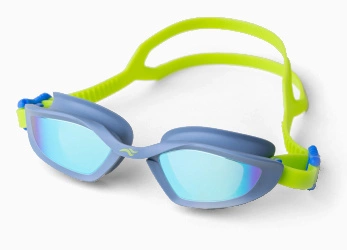
Goggles swimming Aqua Speed Raven Mirror 04 - grey
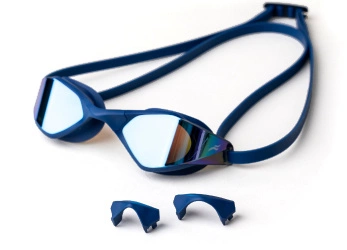
Goggles swimming Aqua Speed Riptide Mirror 10 - blue

Women's sport swimwear Aqua Speed Ana 03 - pink

Women's sport swimwear Aqua Speed Ana 10 - navy blue

AQUA SPEED Wave kickboard + figure eight learning board set 03
